
The Oldest Democracy
A Working Hypothesis on America - United in its Peoples

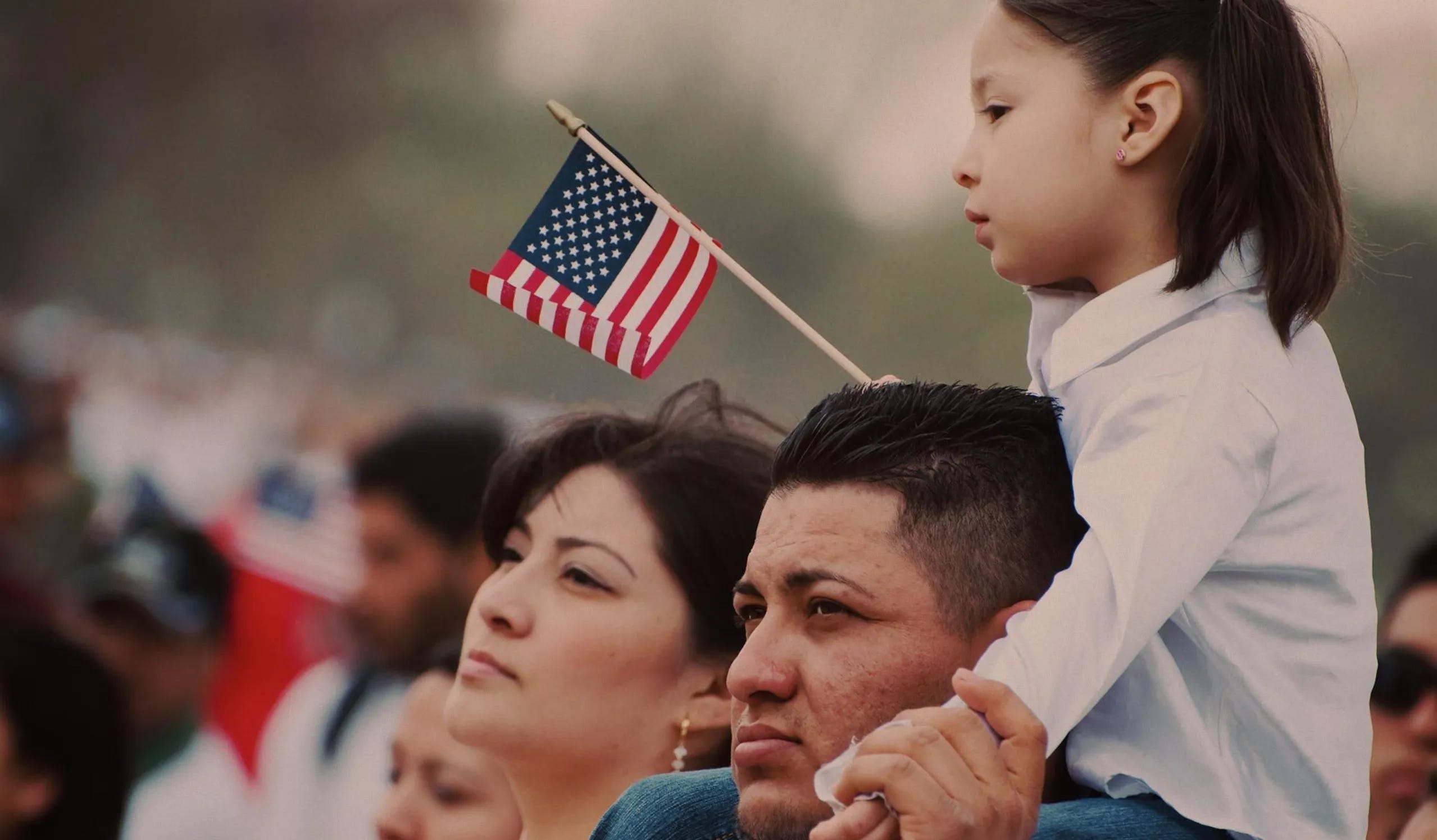
(Picture courtesy Joyce Foundation Webpage)
The State is faltering — but is American democracy alive and well?
This is not a verdict. It’s a hypothesis — a counter-intuitive one, I think, but still worth testing.
The world has learned to watch America through a particular camera angle: the angle of an overpowering, omnipresent State — the great empire that is the United States. From that angle, the last 14–15 months have been a familiar reel: a naked exhibition of power—economic and military; coercion; crackdowns; spectacle; and a time-lag of accountability that can make state power feel untouchable, at home and beyond its borders.
If this is the whole picture, our cynicism and fear may seem justified. And yet I wonder if hope is still rational, even when it feels naive—not because “this too shall pass,” but because the core American democratic idea, and the people themselves, is alive and kicking.
This dominant image is not wrong, but it is incomplete—because it collapses 360 million people into the actions of the State.
What if we are mistaking the State’s visibility for the nation’s soul? And what if we are missing the fact that civic life—democracy as a practice—is showing up everywhere else: on streets, in town halls, in courts, in faith communities, across campuses, and through a fast-growing layer of independent journalism? Silently, and not-so-silently, in large numbers.
That’s the hypothesis:
democracy may be thinning in elite containers and thickening in lived, contested public space.
Yes, institutions are struggling — and the big media machines aren’t really helping
It’s hard to deny institutional fragility: legislatures that feel theatrical, universities that manage risk more than inquiry, corporations that talk values but hedge when values cost money, and a mainstream media ecosystem pulled toward partisanship, arm-chair ideologues, outrage, and their own establishment interests.
Cable news is a clean symbol of the problem. Fox News continues to thrives on grievance and identity polarization; CNN, in a different register, often normalizes democratic strain by packaging it as another panel debate, another horse-race update, another “both sides” rhythm. Neither is built for complexity; both are built for attention.
To be fair, the American media story is not only cable television. There is still a layer of old-school, institutionally serious reporting that often does what democracy requires: it documents, verifies, corrects, and stays on a story long after the cameras move on. Whatever one thinks of their editorial instincts, outlets like The New York Times and The Washington Post have continued to produce deep, consequential investigations—on courts, money, policing, immigration enforcement, and abuses of power—while maintaining reporting muscle that many local newsrooms simply no longer have. They are not immune to incentives, blind spots, or narrative framings; when they are at their best, they provide something essential: a durable public record that citizens, lawyers, judges, and organizers can actually use.
But democracy has never lived only inside institutions. It also lives in community habits: assembling, dissenting, questioning, documenting, litigating, refusing.
Democracy on the street — not only as a big-city hobby, but as a nationwide reflex
One of the laziest assumptions about American protest is that it’s coastal and predictable. The past year evidence doesn’t support that, actually it busts that myth fairly and squarely.
The protest data itself is a signal. ACLED reports a dramatic rise in demonstrations in 2025, driven largely by opposition to the administration and migration policy. (ACLED) Their reporting also tracks large synchronized waves — including the “No Kings” demonstrations and the “No Kings II” day that logged 1,950+ confirmed demonstrations across every state and Washington, D.C. (ACLED)
This matters less for the slogans than for the muscle memory: millions of Americans are not only reacting online; they’re repeatedly occupying civic space — often locally, often with no party branding, often led by ordinary community networks rather than national machines.
Immigration enforcement, and the surprising breadth of who shows up
If you want readers to see the difference between “the State” and “the people,” watch what happens when federal power enters daily life.
In late January 2026, the federal immigration enforcement surge in Minnesota — “Operation Metro Surge” — triggered protests, lawsuits, and a wave of community organizing. A federal judge declined to halt the operation while litigation proceeds. (Reuters)
But the more revealing story is the civic response around it: fear, anger, solidarity, and rapid formation of “witness” networks. The The Guardian described intense public backlash and plans for hundreds of protests nationwide under the “ICE Out of Everywhere” banner. (The Guardian)
The same reporting captured something more intimate than protest counts: residents describing their city as “occupied,” and communities improvising civic defense in real time. (The Guardian)
Here’s the point how people are showing up beyond narrow self-interest.
In New Braunfels — a Trump-leaning place by reputation — hundreds rallied against ICE, chanting “Immigrants are welcome here.” (San Antonio Express-News)
In Edwardsville, around 300 people gathered at the county courthouse to hold a vigil for Alex Pretti, killed by federal agents in Minneapolis — with passing vehicles honking support. (The Edwardsville Intelligencer)
In Houston, about 100 cyclists rode 15 miles in one of 200+ nationwide rides to honor Pretti and Renee Good — and to protest federal force. Many riders were not immigrants; some were healthcare workers; some were simply furious citizens. (Houston Chronicle)
In Texas, public school students walked out across Austin, Waco, San Antonio and beyond — not because they were all immigrants, but because they read the moment as a civic red line. (The Texas Tribune)
These are but only a few examples. This is a key myth-buster: civic action is not only “affected groups defending themselves.” It increasingly looks like a broader, values-driven reflex: neighbors showing up for neighbors, citizens showing up to defend limits on power because they don’t want a country where force becomes normal.
Faith communities and moral witness — democracy outside the state’s script
Another place democracy is becoming visible is where moral language often lives.
A Reuters photo series captured Capitol police detaining Faith in Action activists during a protest tied to immigration enforcement and DHS funding disputes. (Reuters)
Whether one agrees with every policy demand is beside the point. The democratic signal is that people are willing to put bodies on the line — sometimes in collars — to contest what they see as unlawful or immoral state action.
This is civic life operating through institutions that aren’t party machines: churches, synagogues, mosques, interfaith coalitions — not to “replace politics,” but to hold politics to a common human moral standard.
Jews showing up for Palestinians — refusing the State’s monopoly on identity
One of the clearest examples of democracy as conscience is also one of the most difficult for simplistic narratives: Jewish Americans publicly protesting for Palestinians.
The The Washington Post reported arrests of protesters at Trump Tower in March 2025 at a demonstration organized by Jewish Voice for Peace — with participants wearing “Not in our name” messaging while protesting detention and U.S. policy. (The Washington Post) The Post has also reported Jewish-led actions on Capitol Hill around U.S. weapons sales and Gaza. (The Washington Post)
This matters because it breaks a central state tactic: claiming to speak for a community, and framing dissent as betrayal of identity. When people refuse that — when they reclaim moral agency from state narration — democracy is happening at its sharpest edge.
The “Mamdani phenomenon”: democracy that outpaces the gatekeepers
Street democracy isn’t the only democracy. Sometimes civic energy migrates into electoral surprise.
In New York City, Zohran Mamdani’s rise became a case study in how grassroots organization can outpace establishment comfort. The Associated Press covered his primary victory and the shock it sent through Democratic power networks. (AP News) AP also reported the internal party fretting and hesitation around endorsing him — the “snub” dynamic — even as momentum grew. (AP News) And the Post documented how his campaign leveraged direct, participatory communication and social media to build something closer to a movement than a traditional machine. (The Washington Post)
Whatever one thinks of Mamdani’s ideology, the democratic point is broader: people organized, people turned out, and gatekeepers on either side of the isle could not control the outcome.
Independent journalism as an “alternative fourth estate”
Now, the credibility piece: if cable news simplifies, who helps the public see?
This is where a quiet democratic infrastructure has been growing. ProPublica has expanded its Local Reporting Network and launched a “50 State Initiative” to partner with local newsrooms for accountability reporting. (ProPublica) The American Journalism Project reports strong growth across its portfolio — revenue and staffing increases that translate into more local accountability journalism. (American Journalism Project) And the broader local news transformation is tracked in “State of Local News 2025,” documenting how the ecosystem is shifting beyond the old daily-paper model. (Local News Initiative)
This is not a romantic claim that “independent is always right.” It’s a practical observation: democratic life depends on civic oxygen — reliable information, court reporting, local scrutiny — and a growing layer of nonprofit and independent journalism is attempting to provide it across America.
Is this a sign of democracy?
Here’s the humility part: it may be too soon to declare health of American democracy. Polarization is real. White supremacist ideology is real. Institutional weakness is real. Message of global dominance is real. Large scale friends unfriended at global stage is very real.
But we perhaps should not forget that the evidence above supports a narrower, testable claim:
When large numbers of people show up beyond narrow personal stake — in conservative and liberal towns, in high schools, at courthouses, in faith communities, in vigils and rides and walkouts — that looks like a society is still practicing its democratic reflexes, telling us, not all is lost, that the imperfect idea of American Peoples continues to breath and thrive underneath.
And these reflexes matter. They are the raw material from which reforms, legal constraints, electoral surprises, and cultural shifts can (and hope) shall emerge. Should we not pay heed to Peoples of State and not just the State of that State?
A hesitant landing
If we define democracy only as smoothly functioning institutions, pessimism is justified, fear is real.
But if we define democracy also as practice — the lived habit of contesting power, insisting on limits, defending neighbors, building accountability, refusing moral outsourcing — then a different hypothesis emerges:
American democracy may be thinning in elite containers, but thickening in lived civic spaces.
That doesn’t guarantee the outcome.
It does, however, complicate the story — and it offers a sober kind of consolation: the spirit of civic life in America is noisy, plural, contested — and still, unmistakably, alive. We the the world perhaps need to pay more attention to the Peoples that is America - in all its imperfections.
As we say in India - ‘Picture abhi baaki hai’ : ‘the movie has not finished yet’.